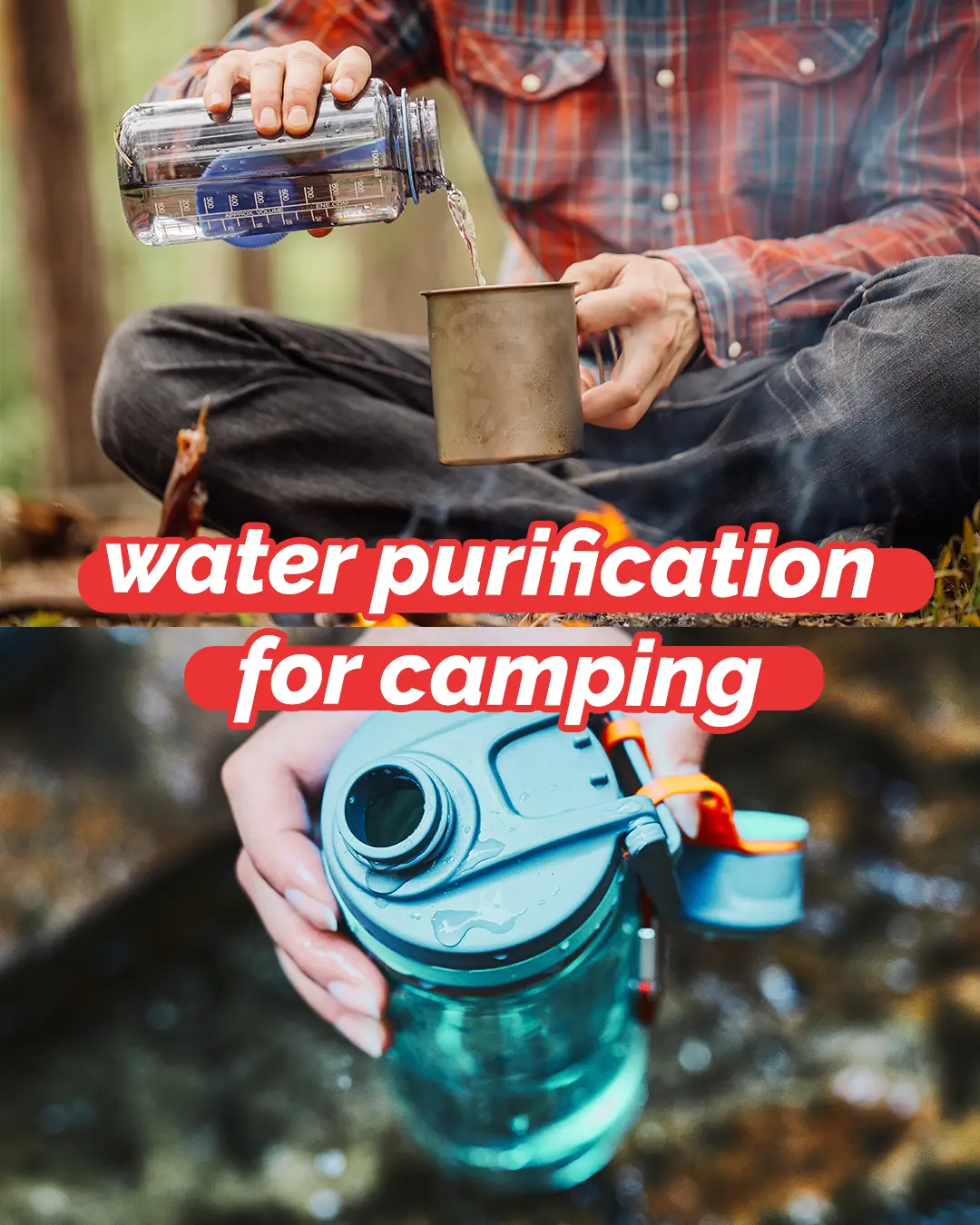

Water Purification for Camping: Safe Drinking in the Wild
(Beginner to Advanced Guide for Hikers, Backpackers & Campers)
Imagine this:
You’ve just hiked 12 kilometers into the backcountry.
Your legs are sore. The sun is dipping.
You reach a lake. Crystal clear. Untouched.
But is it safe to drink?
The answer: not yet.
Even the clearest stream can carry harmful pathogens that make you violently sick in the wild.
Whether you’re wild camping in the Rockies or hiking alpine trails in Norway, water purification is a survival skill, not a luxury.
This guide shows you how to find, treat, and safely drink water in the wild, using methods trusted by outdoor experts.
🚩 Why You Should NEVER Drink Untreated Water
Even pristine-looking water can contain:
- Giardia lamblia (common cause of “beaver fever”)
- Cryptosporidium (hard-to-kill parasite)
- Bacteria like E. coli
- Viruses (in some regions)
- Chemical runoff (near farms/mines)
Symptoms of contaminated water:
- Nausea
- Vomiting
- Diarrhea
- Fever
- Dehydration
Now imagine that… 15km from the nearest road.
🏕️ Step 1: Where to Find Water Safely
Not all water sources are equal.
Best sources:
- Fast-moving streams
- Flowing rivers
- Lakes with visible inflow/outflow
- Spring-fed sources
Avoid:
- Still or stagnant water
- Water with visible algae or scum
- Water near campsites or animal activity
- Water below farmland or roads
Pro Tip:
Always collect water from upstream of trails, camps, and animals.
🧰 Step 2: Choose Your Water Treatment Method
You don’t need a lab.
You need a simple system that works.
Here are the 4 most reliable water purification methods for camping and hiking.
1️⃣ Water Filters (Most Popular)
What they do:
Remove protozoa (like Giardia), bacteria, dirt
Don’t remove:
Viruses (unless rated for it)
Best for:
- Backcountry camping
- Clear water sources
- Daily use
Common Filter Types:
- Pump filters (e.g. MSR MiniWorks)
- Squeeze filters (e.g. Sawyer Squeeze)
- Straw filters (e.g. LifeStraw)
- Gravity filters (e.g. Platypus GravityWorks)
Pros:
- Long-term use
- No chemicals
- Fast (gravity or pump)
Cons:
- Can clog with silty water
- Requires maintenance
2️⃣ Chemical Treatment (Tablets or Drops)
What they do:
Kill viruses, bacteria, and protozoa
Best for:
- International travel
- Lightweight hiking
- Backup method
Examples:
- Aquatabs
- Potable Aqua (iodine-based)
- Katadyn Micropur (chlorine dioxide)
Pros:
- Ultra-lightweight
- No filters or gear needed
- Effective against viruses
Cons:
- Chemical taste (sometimes)
- Wait time (30+ minutes)
- Less effective in very cold or murky water
3️⃣ Boiling Water (Most Reliable)
What it does:
Kills all pathogens (bacteria, protozoa, viruses)
How to do it:
- Bring water to a rolling boil
- Boil for at least 1 minute
- 3 minutes at high altitudes (above 2000m)
Best for:
- Cold regions
- Emergency disinfection
- Cooking
Pros:
- Extremely reliable
- No gear required (if you have fire/stove)
Cons:
- Time-consuming
- Uses fuel or firewood
- Doesn’t remove debris
4️⃣ UV Purifiers (Hi-Tech Option)
What they do:
Use ultraviolet light to kill microorganisms
Example:
SteriPEN Ultra
Best for:
- Solo travelers
- Fast, clear water treatment
- International camping
Pros:
- Quick (under 90 seconds)
- Effective against viruses
- Lightweight
Cons:
- Needs batteries
- Doesn’t remove dirt or sediment
- Less ideal for groups
⚖️ Comparison Table
| Method | Removes Viruses | Removes Dirt | Wait Time | Weight | Ideal Use |
|---|---|---|---|---|---|
| Filter | ❌ (most) | ✅ | Low | Medium | Backcountry |
| Tablets/Drops | ✅ | ❌ | 30–60 min | Light | International/UL |
| Boiling | ✅ | ❌ | 10–15 min | Medium | Emergency/Camping |
| UV Light | ✅ | ❌ | Fast | Light | Solo travelers |
💡 Step 3: Pre-Filter When Water Is Dirty
If the water is cloudy or full of debris:
- Pour it through a bandana, coffee filter, or cloth first
- Then use your treatment method
This prevents filters from clogging or UV from failing.
🏕 Real-World Example: My 3-Day Setup
When I go on 3-day hikes, I carry:
- Sawyer Squeeze (primary filter)
- Aquatabs (backup)
- Titanium pot (boiling if needed)
- 2L bladder + collapsible bottle
That covers every situation:
- Silty rivers
- Clear lakes
- Emergencies
- Filter failure
⚠️ What NOT to Do
- Drink untreated water “just once” — it’s not worth it
- Skip water because it “looks clean”
- Forget backup treatment
- Drink from still water ponds
- Ignore water needs in cold weather (you still dehydrate)
🥤 Hydration Tips for Campers & Hikers
- Drink before you’re thirsty
- Always treat water before drinking
- Plan 3–4L per day (more in heat or elevation)
- Keep electrolytes in your food or drinks
🌍 Global Considerations
In some countries, viruses are more common in water than in North America or Europe.
Use:
- Boiling
- Chlorine dioxide
- UV treatment
Especially in tropical, urban, or post-flood areas.
🧭 Emergency Tip
If you have no gear:
- Find the cleanest, fastest-flowing water
- Boil it for 5 minutes
- Let cool in a covered container
- Drink only if absolutely necessary
Never gamble with wilderness water.
FAQ: Water Purification for Camping
1. What’s the safest water purification method?
Boiling is the most reliable, followed by chlorine dioxide drops.
2. Are LifeStraw or Sawyer filters good for beginners?
Yes — both are lightweight, affordable, and easy to use. Sawyer filters are reusable and great for long-term trips.
3. Can I use bleach to disinfect water?
Yes, but only in emergencies. Use 2 drops of unscented bleach per liter, wait 30 minutes, and only if no other option exists.
4. Do I need to filter spring water?
Yes. Even natural springs can be contaminated by animal feces or surface runoff.
5. What’s the best method for groups?
Gravity filters (like Platypus) are efficient for 2–4 people. For solo trips, use a squeeze filter or chemical tablets.
✍️ Final Thoughts
Water is life — but only if it’s clean.
Whether you’re a weekend camper or a thru-hiker, your ability to find and treat water safely is one of the most important outdoor skills you can learn.
Choose a method.
Test it before you go.
Always carry a backup.
And then drink deeply from the wild — without fear.
🔗 Explore More on Explorave
Now that you’ve mastered water purification, make sure you’re ready for everything else:
- Beginner’s Guide to Backcountry Camping
- Backcountry Camping Gear Checklist
- Backcountry Food Planning Guide
Explorave is here to help you explore smarter, travel lighter, and thrive outdoors.