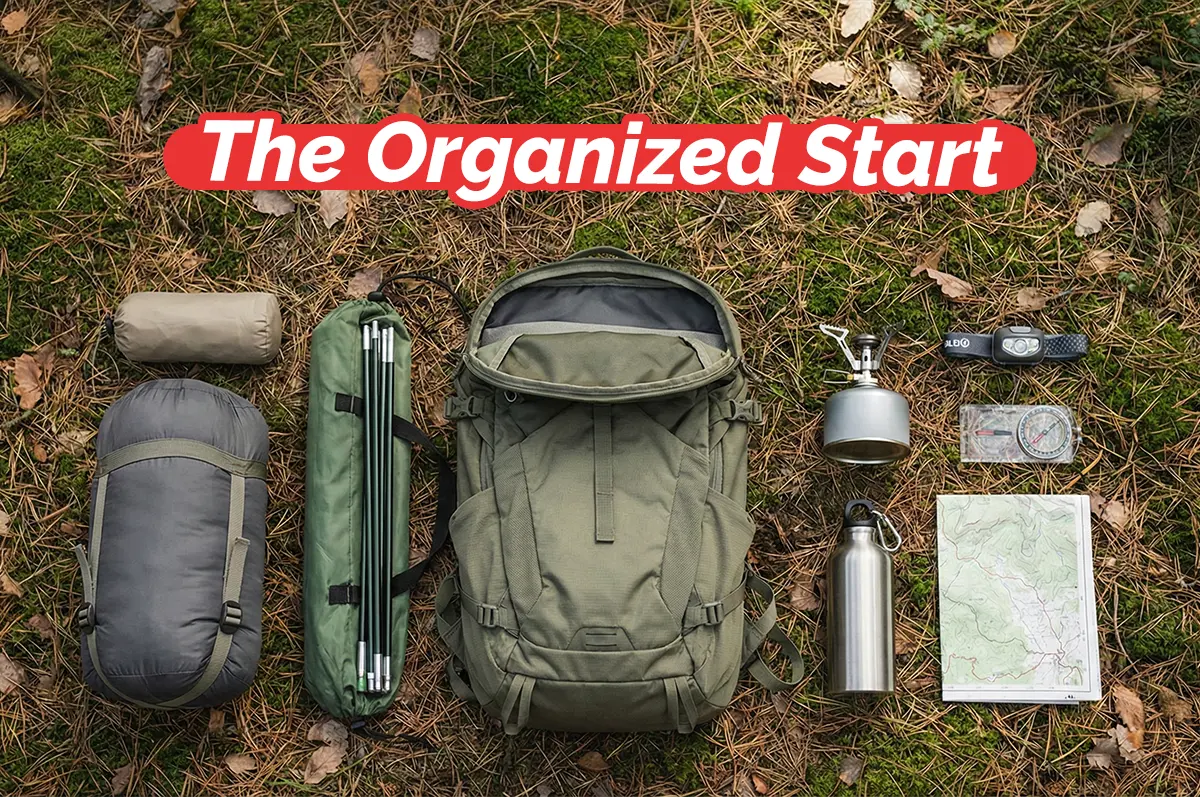

Backcountry Camping Gear Checklist for Beginners
(Printable List + Pro Packing Strategy)
Your first backcountry camping trip doesn’t fail because of distance.
It fails because of packing mistakes.
Too much gear? You suffer under weight.
Too little gear? You suffer at night.
As someone who’s packed for cold Canadian alpine nights and scorching Australian bush trails, I can tell you this:
Your gear can make or break your experience.
This guide gives you:
- A complete beginner checklist
- Climate-specific advice (Canada + Australia)
- Weight-saving tips
- Common gear mistakes
- Smart packing strategy
Let’s build your kit the right way.
The Big 4: Your Core System
These 4 items determine 70% of your pack weight.
1️⃣ Backpack (50–65L for beginners)
Look for:
- Adjustable torso length
- Hip belt padding
- Ventilated back panel
- 1.2–1.8 kg range
Avoid oversized 80L packs for short trips.
2️⃣ Tent (3-Season Recommended)
Canada:
- Double-wall tent
- Strong rainfly
- Wind resistance
Australia:
- Excellent ventilation
- Insect protection
- UV-resistant fabric
3️⃣ Sleeping Bag
Match temperature rating to region:
Canada:
- Rated at least 0°C to -5°C (even summer alpine)
Australia:
- 0°C to 5°C depending on state
4️⃣ Sleeping Pad
Never skip this.
It provides:
- Insulation
- Comfort
- Ground protection
R-value matters in Canada.
Complete Backcountry Camping Gear Checklist
You can turn this into a downloadable PDF later (lead magnet).
🏕 Shelter
- Tent
- Tent stakes
- Groundsheet/footprint
- Repair tape
🛏 Sleep System
- Sleeping bag
- Sleeping pad
- Lightweight pillow (optional)
👕 Clothing (Layering System)
Canada
- Moisture-wicking base layer
- Insulated mid-layer
- Waterproof shell
- Extra socks
- Beanie
Australia
- Sun hat
- Long-sleeve UV shirt
- Breathable pants
- Light fleece
- Rain shell
Always pack:
- Extra socks
- Underwear
- Camp sleepwear
🍳 Cooking System
- Lightweight stove
- Fuel canister
- Lighter
- Pot
- Spork
- Mug
- Water filter or purification tablets
- Biodegradable soap
💧 Water System
Never assume natural water is safe.
Canada:
- Always filter (Giardia risk)
Australia:
- Confirm water sources in advance
- Carry extra capacity in dry regions
Bring:
- 2–3L total carrying capacity
- Backup purification method
🧭 Navigation
- Physical map
- Compass
- Offline map app
- Power bank (short trips only)
Never rely 100% on your phone.
🚑 Safety Essentials
- Headlamp (with extra batteries)
- First aid kit
- Multi-tool
- Whistle
- Emergency blanket
- Bear spray (Canada wilderness)
- PLB for remote Australian bush trips
Always check regulations from:
- Parks Canada
- NSW National Parks and Wildlife Service
What NOT to Pack (Beginner Mistakes)
- Full-size shampoo
- Heavy books
- Multiple outfits
- Large knives
- Excess cookware
- Glass containers
Weight equals fatigue.
Fatigue equals poor decision-making.
Smart Packing Strategy
Follow this order:
Bottom of Pack:
- Sleeping bag
Middle:
- Food
- Heavy items close to spine
Top:
- Rain jacket
- Snacks
- First aid
Outside Pockets:
- Water
- Map
- Headlamp
Target Pack Weight for Beginners
Ideal:
- 20–25% of your body weight max
Example:
70kg person → 14–17kg pack maximum
Lighter = more enjoyable.
Canada vs Australia Packing Differences
| Category | Canada | Australia |
|---|---|---|
| Main Risk | Cold & rain | Heat & sun |
| Critical Item | Insulation | Sun protection |
| Wildlife | Bears | Snakes |
| Water Planning | Filter required | Capacity planning |
Always adjust to region.
Gear Testing Rule (CRITICAL)
Before your trip:
- Set up tent at home
- Test stove
- Inflate sleeping pad
- Walk with full pack for 30 minutes
Never test gear for the first time in the wilderness.
FAQ – Backcountry Camping Gear
1. How much should beginner gear cost?
You can start between $500–$1,200 depending on quality. Don’t buy ultralight gear immediately.
2. Can I rent gear?
Yes. Many outdoor stores in Canada and Australia offer rentals. Great for first trips.
3. Is expensive gear worth it?
Only if you go often. Comfort and weight reduction matter more over time.
4. What is the heaviest item usually?
Tent and food are usually the heaviest items.
5. What’s the biggest gear mistake beginners make?
Overpacking “just in case” items.
Final Thoughts
Backcountry camping isn’t about having the most expensive gear.
It’s about having the right gear.
Pack smart.
Pack light.
Pack with purpose.
And your first wilderness night will feel empowering — not overwhelming.
🚀 Continue Your Backcountry Journey on Explorave
If this checklist helped you, don’t stop here.
Next read:
- Beginner’s Guide to Backcountry Camping
- Backcountry Food Planning for Multi-Day Trips
- Water Purification in the Wild
- Canada vs Australia Wilderness Safety Guide
Explorave is built for people who choose wild over easy.
Bookmark it.
Share it.
Plan your next adventure.