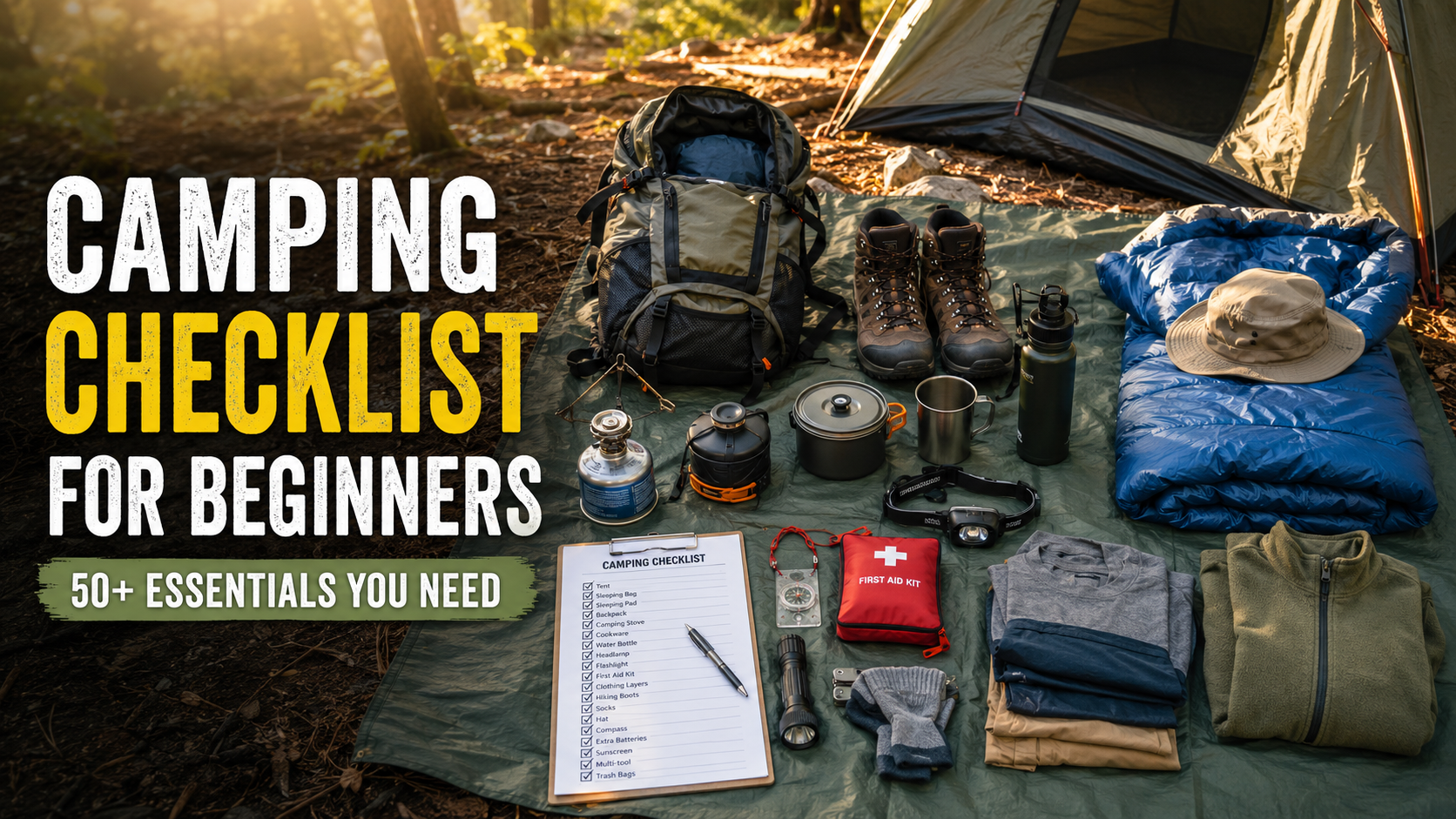

Why Every Beginner Camper Needs a Camping Checklist
If you’re planning your first camping trip, a camping checklist is one of the most valuable tools you can bring—before you pack a single piece of gear.
After years of camping in national parks, state parks, and backcountry campgrounds, I’ve seen the same pattern repeatedly: beginners rarely ruin a trip because they lack expensive gear. More often, they forget simple essentials that seem obvious in hindsight.
Something as small as forgetting a headlamp, a can opener, or extra socks can make a weekend outdoors much less enjoyable.
A camping checklist helps eliminate guesswork. Instead of wondering whether you’ve packed everything you need, you can leave home confident that the essentials are covered.
For first-time campers, that peace of mind is often just as important as the gear itself.
Essential Camping Checklist for Beginners (Quick Reference)
If you’re short on time, these are the must-have items every beginner camper should pack:
Shelter
- Tent
- Tent stakes
- Rainfly
- Ground tarp
Sleep System
- Sleeping bag
- Sleeping pad
- Camp pillow
Clothing
- Moisture-wicking shirts
- Warm layers
- Rain jacket
- Hiking shoes
- Extra socks
Food & Water
- Camp stove
- Fuel
- Water bottles
- Cooler
- Food and snacks
Safety
- First aid kit
- Headlamp
- Extra batteries
- Emergency blanket
- Map
Personal Items
- Toothbrush
- Sunscreen
- Bug spray
- Prescription medications
- Toilet paper
Comfort Items
- Camp chair
- Lantern
- Power bank
- Hammock (optional)
For most first-time campers, these essentials are enough for a safe and enjoyable weekend camping trip.
The Most Common Beginner Camping Mistakes
Most beginner camping mistakes happen before the trip even starts.
Some of the most common ones include:
- Forgetting tent stakes or guylines
- Packing a tent without checking that all parts are included
- Bringing food but forgetting cooking supplies
- Not packing enough drinking water
- Underestimating nighttime temperatures
- Forgetting a first aid kit
- Leaving batteries out of flashlights or headlamps
- Packing too many unnecessary items and not enough essentials
One mistake I see frequently is assuming a campground will have everything you need. Many first-time campers arrive expecting camp stores to carry missing gear, only to find limited supplies or higher prices.
Another common issue is focusing on daytime weather. A beginner might see a forecast of 75°F and pack shorts and T-shirts, not realizing temperatures can drop 20–30 degrees after sunset. Even during summer, a cool night can make sleeping difficult if you’re not prepared.
Why Every Item on Your Checklist Matters
Every item on a camping checklist serves a purpose. The goal isn’t to pack more gear—it’s to pack the right gear.
Tent and shelter equipment protect you from wind, rain, sun exposure, and insects. I’ve watched campers struggle through a rainy night because they forgot a ground tarp or failed to secure their tent properly before leaving for a hike.
Sleeping gear, including a quality sleeping bag and sleeping pad, has a direct impact on how much you enjoy your trip. Many beginners focus on the sleeping bag but overlook the sleeping pad. In reality, the pad provides insulation from the cold ground and often makes a bigger difference in comfort.
Lighting equipment becomes essential as soon as darkness falls. A headlamp allows you to cook, organize gear, or walk to campground facilities while keeping both hands free. Experienced campers rarely rely on a phone flashlight because batteries drain quickly and phones are needed for emergencies.
Cooking supplies help you prepare meals safely and efficiently. It’s surprisingly common for first-time campers to bring food but forget essentials like a lighter, cooking utensils, or fuel for their camp stove.
Safety items such as a first aid kit, map, whistle, and emergency supplies may never be used, but they’re the items you’ll be most grateful to have when something unexpected happens.
A Checklist Saves Time and Money
Many new campers assume a checklist is simply a packing reminder. In reality, it can save both time and money.
Without a checklist, forgotten items often lead to last-minute purchases at outdoor stores, gas stations, or campground shops. Those purchases are usually more expensive and offer fewer choices.
I once met a family that had driven several hours to a campground only to realize they had forgotten their sleeping bags. Their only option was buying replacements from a nearby outdoor store at premium prices.
A reusable camping checklist also helps you avoid buying duplicate gear. You always know what you already own, what needs replacing, and what should be packed before each trip.
Over time, your checklist becomes a personalized system that makes trip preparation faster and more reliable.
Start Simple and Build Experience
One of the biggest misconceptions about camping is that beginners need hundreds or even thousands of dollars’ worth of gear before their first trip.
That’s simply not true.
In fact, I usually recommend that first-time campers start with a basic overnight or weekend camping trip close to home. This allows you to learn what works for you before investing in additional equipment.
Focus on the core essentials first:
- Shelter
- Sleep system
- Food and water
- Appropriate clothing
- Basic safety gear
After each trip, review what you used, what you didn’t use, and what you wish you had brought. That’s how experienced campers refine their packing systems over time.
The goal isn’t to bring everything you own. The goal is to bring what you’ll actually need.
A well-planned camping checklist helps beginners stay organized, avoid common mistakes, and spend less time worrying about forgotten gear. More importantly, it allows you to focus on what camping is really about—enjoying the outdoors, making memories, and building confidence with every trip.
Understanding the Basics of Camping Before You Pack
One of the fastest ways to ruin a first camping trip is to start packing before you understand what kind of trip you’re actually taking.
Over the years, I’ve met countless first-time campers who spent hours researching gear and buying equipment, only to realize they packed for the wrong situation. Some brought heavy cold-weather gear for a summer campground. Others packed like they were heading into the wilderness when they were staying at a campsite with bathrooms, potable water, and a camp store just a few minutes away.
A camping checklist works best when it’s built around the specifics of your trip.
Before you pack a single item, ask yourself:
- Where am I camping?
- How long will I be there?
- What weather conditions should I expect?
- Will I have access to water, restrooms, and my vehicle?
- Am I camping alone, with friends, or with family?
The answers to these questions determine what belongs on your camping checklist and what can stay home.
Many beginners focus on gear first and planning second. Experienced campers do the opposite.
Know Your Camping Style
One of the most overlooked parts of trip planning is understanding the type of camping you’re doing.
For beginners, the differences matter because each camping style requires a different level of preparation.
Car camping is usually the best starting point. You park near your campsite and have easy access to your vehicle throughout the trip. If you forget something, there’s a good chance it’s still in the trunk.
Other common camping styles include:
- Tent Camping: Sleeping in a tent at a designated campground.
- Car Camping: Driving directly to the campsite with easy gear access.
- RV Camping: Camping with built-in shelter, electricity, and amenities.
- Backpacking: Carrying all gear on your back to a remote campsite.
One mistake I frequently see is beginners watching backpacking videos online and assuming they need the same equipment for a weekend campground trip. In reality, most first-time campers are far better off starting with a simple car camping setup.
You’ll have more comfort, fewer challenges, and a better chance of enjoying the experience.
My recommendation: choose a developed campground for your first trip. Access to restrooms, drinking water, and campground hosts can make a huge difference when you’re still learning.
Choose the Right Campsite
A good campsite can compensate for minor gear mistakes. A poor campsite can make even expensive gear feel inadequate.
Before making a reservation, spend a few minutes researching the campground.
Look for information about:
- Drinking water availability
- Restrooms and showers
- Fire rings and cooking areas
- Picnic tables
- Campground regulations
- Cell phone coverage
- Nearby emergency services
- Wildlife activity in the area
One family I met at a state park arrived expecting electrical hookups because they had seen photos online. Their site had none. As a result, several devices were dead before the end of the weekend.
Another common beginner mistake is choosing a remote campsite simply because the photos look beautiful. Scenic locations are great, but beginners generally have a more enjoyable experience when basic amenities are available.
For your first trip, convenience is often more valuable than isolation.
Check the Weather—Then Prepare for Something Different
Weather catches more beginner campers off guard than almost anything else.
A forecast might show sunny skies and comfortable temperatures, but conditions at camp can feel very different from conditions in town.
One lesson many campers learn the hard way is that nighttime temperatures matter more than daytime highs.
For example, a campground forecast showing 72°F during the day may also include an overnight low of 42°F. If you only pack based on the afternoon weather, you’ll likely spend the night cold and uncomfortable.
Before every trip:
- Check forecasts from multiple sources
- Pay attention to overnight lows
- Look for wind and rain predictions
- Pack one extra warm layer
- Bring rain gear, even when rain isn’t expected
I’ve carried an extra rain jacket on dozens of trips when the forecast looked perfect. Most of the time it stayed in my pack. The few times I needed it, it was worth every ounce.
Understand Campground Rules and Outdoor Etiquette
Being prepared isn’t just about what you pack. It’s also about understanding how to camp responsibly.
Every campground has its own rules, and failing to follow them can negatively impact both your trip and the experience of other campers.
Pay close attention to:
- Fire restrictions
- Quiet hours
- Food storage requirements
- Pet policies
- Generator regulations
- Waste disposal procedures
Food storage is one area where beginners often make mistakes. Leaving food unattended may attract raccoons, squirrels, or even bears in some regions.
Whenever possible, store food in vehicles, bear-resistant lockers, or approved containers.
Experienced campers also follow Leave No Trace principles. The goal is simple: leave the campsite looking as though nobody was ever there.
That means packing out trash, respecting wildlife, staying on designated trails, and minimizing your impact on the environment.
Plan Before You Pack
The most successful camping trips usually begin several days before departure.
A checklist is important, but it should be the result of good planning—not a substitute for it.
Before every trip, I review the campground details, weather forecast, trip length, and planned activities. Only then do I start packing.
This process prevents overpacking, reduces forgotten items, and helps ensure that every piece of gear serves a purpose.
For beginners, that’s one of the most valuable lessons in camping.
You don’t need the biggest gear collection or the most expensive equipment. You simply need a clear plan and a checklist built around the realities of your trip.
When you understand where you’re going, what conditions you’ll face, and what resources will be available, packing becomes much easier—and your first camping experience becomes far more enjoyable.
Camping Clothing Checklist
When beginners think about camping gear, they usually focus on tents, sleeping bags, and camp stoves. Clothing often becomes an afterthought.
That’s a mistake.
In my experience, clothing has a bigger impact on comfort than almost any piece of camping equipment. I’ve seen campers sleep comfortably in budget tents but have a miserable weekend because they packed the wrong clothes. I’ve also seen beginners arrive with expensive gear and still spend the evening cold, wet, or uncomfortable because they underestimated how quickly conditions can change outdoors.
A good camping clothing checklist isn’t about packing lots of outfits. It’s about preparing for changing temperatures, unexpected weather, and the realities of spending an entire day outside.
For most beginner campers, comfort comes from having versatile layers rather than a large amount of clothing.
Start with Moisture-Wicking Base Layers
Your base layer is the foundation of your clothing system.
It sits directly against your skin and helps regulate body temperature by moving sweat away from your body. Even on cool days, you’ll likely work up a sweat while setting up camp, gathering firewood, or hiking nearby trails.
Good choices include:
- Merino wool shirts
- Synthetic performance shirts
- Moisture-wicking underwear
- Lightweight athletic layers
One of the most common beginner mistakes is packing mostly cotton clothing. Cotton feels comfortable initially, but once it becomes damp from sweat, rain, or morning dew, it dries slowly and loses much of its insulating ability.
I learned this lesson years ago during an early spring camping trip when a cotton sweatshirt became soaked during a short hike. Temperatures dropped that evening, and the damp fabric made the cold feel significantly worse.
That’s why many experienced campers prioritize synthetic or wool layers whenever possible.
Pack Layers for Changing Conditions
If there’s one clothing strategy I recommend to every beginner camper, it’s layering.
Weather forecasts only tell part of the story. Conditions at camp often feel different than they do in nearby towns, especially in forests, mountains, deserts, or near lakes.
A practical layering system includes:
- Lightweight base layer
- Mid-layer such as fleece or insulated pullover
- Warm jacket for evenings
- Waterproof outer shell
One mistake I regularly see at campgrounds is people packing only for daytime temperatures.
A camper sees a forecast high of 78°F and assumes shorts and T-shirts will be enough. Then sunset arrives, temperatures drop into the 40s, and they’re wearing every item they brought just to stay warm around the campfire.
For beginners, I always recommend packing one warmer layer than you think you’ll need. It rarely goes unused.
Bring the Right Footwear
Your feet determine how much you enjoy a camping trip.
For most campground camping, comfortable trail shoes or broken-in hiking shoes work perfectly. You don’t necessarily need heavy hiking boots unless you’re tackling rugged terrain.
Your footwear checklist should include:
- Hiking shoes or trail runners
- Extra socks
- Comfortable camp shoes or sandals
- Waterproof footwear if rain is expected
A mistake that catches many beginners off guard is wearing brand-new hiking boots on their trip.
I’ve watched campers develop painful blisters within the first few hours because they never wore their boots before arriving at camp.
If you’re buying new footwear, spend a week or two wearing it on walks around your neighborhood before your trip.
Extra Socks Are Non-Negotiable
If I could give beginner campers only one clothing recommendation, it would be this: bring more socks than you think you’ll need.
Dry feet are comfortable feet.
Socks can get wet from:
- Rain
- Sweat
- Creek crossings
- Morning dew
- Accidental spills around camp
I always pack at least one extra pair beyond what I expect to use.
For cooler-weather trips, I also bring a dedicated pair of clean sleeping socks that never leave the tent. Putting on warm, dry socks before bed is one of the simplest ways to improve overnight comfort.
It’s a small detail experienced campers rarely overlook.
Don’t Forget Rain Gear
Rain gear is one of those items that seems unnecessary—until you need it.
Many beginners skip it because the forecast looks clear. Unfortunately, weather forecasts aren’t guarantees.
I’ve experienced unexpected afternoon storms on trips that were predicted to be sunny all weekend.
At minimum, pack:
- Waterproof rain jacket
- Lightweight rain pants (if space allows)
- Waterproof hat or hood
A quality rain jacket also doubles as a wind barrier on cool evenings, making it useful even when rain never arrives.
My rule is simple: if I’m camping overnight, rain gear goes in the pack regardless of the forecast.
Clothing Checklist for Beginner Campers
Before leaving home, double-check that you have:
- Moisture-wicking shirts
- Comfortable hiking pants or shorts
- Long-sleeve layer
- Fleece or insulated jacket
- Waterproof rain jacket
- Hiking shoes or trail shoes
- Extra socks
- Underwear
- Sun hat or cap
- Sunglasses
- Sleepwear
- Camp shoes or sandals
The best camping clothing checklist isn’t built around fashion or packing options. It’s built around staying dry, warm, and comfortable in changing outdoor conditions.
For beginners, the most successful approach is simple: dress in layers, prioritize practical fabrics, and always prepare for temperatures to be cooler than expected after sunset. Those small decisions can have a bigger impact on your camping experience than almost any piece of gear you’ll bring.
Camping Kitchen and Food Checklist
Food is one of the highlights of any camping trip, but it’s also where many beginner campers run into avoidable problems.
Over the years, I’ve noticed that first-time campers often spend most of their planning time on tents and sleeping gear while treating meals as an afterthought. Then they arrive at camp and realize they’re missing something critical—a can opener, cooking fuel, a lighter, or even enough drinking water.
One of the most memorable examples was a family camping at a state park who packed ingredients for a full breakfast of eggs, bacon, and pancakes. Unfortunately, they forgot their stove fuel canister. Their carefully planned breakfast turned into granola bars and coffee from the campground store.
A camping kitchen doesn’t need to be elaborate. In fact, beginners usually have a much better experience when they keep things simple.
The goal is to create meals that are easy to prepare, easy to clean up, and realistic for the equipment you’re bringing.
Camp Stove and Fuel
While cooking over a campfire sounds appealing, it’s not always practical.
Many campgrounds experience fire restrictions during dry seasons, and wet weather can make campfire cooking frustrating. That’s why I always recommend that beginners bring a camp stove, even if they plan to use the fire ring.
A basic two-burner propane stove is more than enough for most weekend camping trips.
Don’t forget:
- Camp stove
- Propane or fuel canisters
- Lighter
- Waterproof matches
- Backup ignition source
One of the most common mistakes beginners make is assuming fuel is already attached to the stove or forgetting to check how much fuel remains from a previous trip.
Before leaving home, set up the stove in your backyard or driveway and light it for a few minutes. This simple test confirms that everything works and helps avoid unpleasant surprises at camp.
Cooking Utensils and Cookware
You don’t need a full kitchen to cook great camping meals.
In fact, fewer cooking tools often mean less cleanup and fewer forgotten items.
For most beginner campers, these essentials are enough:
- Pot or frying pan
- Spatula
- Tongs
- Sharp knife
- Cutting board
- Can opener
- Plates and bowls
- Cups or mugs
- Forks, spoons, and knives
A mistake I see regularly is planning meals before considering how they’ll actually be cooked.
For example, pancakes sound easy until you realize you’ve forgotten cooking oil, a spatula, or a mixing bowl. Likewise, canned chili isn’t much help if there’s no can opener in camp.
A good rule is to walk through each meal at home step-by-step and make sure every required tool is on your checklist.
Cooler and Food Storage
Proper food storage is about more than convenience—it’s also about food safety.
For weekend camping trips, a quality cooler with plenty of ice is usually all you need.
Pack:
- Cooler
- Ice or frozen ice packs
- Airtight food containers
- Zip-top bags
- Trash bags
One trick I’ve used for years is freezing several water bottles before departure. They keep food cold longer than loose ice, create less mess as they thaw, and provide cold drinking water later in the trip.
A common beginner mistake is placing the cooler in direct sunlight. Even a high-end cooler will struggle if it sits in the sun all day.
Whenever possible, store coolers in the shade and limit how often they’re opened.
Another useful strategy is keeping drinks in a separate cooler. Constantly opening the food cooler to grab beverages causes ice to melt much faster.
Water and Hydration Supplies
Water is often the most underestimated item on a beginner camping checklist.
Most people think about drinking water but forget that they’ll also use water for:
- Cooking
- Washing dishes
- Brushing teeth
- Cleaning hands
- Basic hygiene
For campground camping, I recommend bringing more water than you think you’ll need, even if potable water is available onsite.
Bring:
- Reusable water bottles
- Large water container
- Water filter or purification method if applicable
- Electrolyte packets during hot weather
I’ve experienced campground water systems temporarily shut down due to maintenance issues. Having your own backup water supply eliminates unnecessary stress.
Easy Beginner-Friendly Camping Meals
One of the biggest mistakes beginners make is planning meals that are too ambitious.
Complicated recipes usually mean more ingredients, more cookware, more cleanup, and more opportunities to forget something important.
For a first camping trip, focus on simple meals such as:
- Hot dogs
- Burgers
- Sandwiches
- Breakfast burritos
- Scrambled eggs
- Instant oatmeal
- Pasta with prepared sauce
- Grilled chicken and vegetables
- Foil packet meals
Many experienced campers prepare ingredients at home whenever possible. Chopping vegetables, marinating meat, or assembling breakfast burritos before leaving can save a surprising amount of time at camp.
Remember, camping meals don’t need to be complicated to be enjoyable.
Sample Weekend Camping Food Plan
For beginners, simplicity usually leads to the best results.
A practical weekend meal plan might look like this:
Friday Dinner
- Sandwiches or wraps
- Chips
- Fresh fruit
Saturday Breakfast
- Eggs
- Bacon or sausage
- Coffee
Saturday Lunch
- Deli sandwiches
- Trail mix
- Fruit
Saturday Dinner
- Burgers or grilled chicken
- Vegetables
- S’mores
Sunday Breakfast
- Oatmeal
- Fruit
- Coffee
This type of menu requires minimal equipment while still providing satisfying meals throughout the trip.
Camping Kitchen Checklist
Before leaving home, double-check that you have:
- Camp stove
- Fuel
- Lighter and matches
- Cookware
- Cooking utensils
- Plates, bowls, and cups
- Cooler
- Ice or ice packs
- Food storage containers
- Water bottles
- Water supply
- Dish soap
- Sponge
- Paper towels
- Trash bags
The best camping kitchen checklist isn’t built around gourmet cooking. It’s built around reliability, simplicity, and preparation.
For beginner campers, a few well-planned meals and the right kitchen essentials will create a far better experience than an overly ambitious menu. Keep your meals simple, test your equipment before leaving home, and always pack with food safety and hydration in mind. Those habits will serve you well on every camping trip that follows.
Personal Items and Hygiene Essentials
When most beginners build their first camping checklist, they focus on the obvious gear: the tent, sleeping bag, cooler, and camp stove.
Personal hygiene items often get packed at the last minute.
That’s understandable, but it’s also one of the most common reasons first-time campers end up uncomfortable.
After years of camping in state parks, national forests, and remote campgrounds, I’ve learned that a small hygiene kit can improve a trip almost as much as good camping gear. Staying clean helps you sleep better, feel more comfortable, avoid minor health issues, and enjoy your time outdoors instead of worrying about preventable problems.
I’ve met campers who remembered expensive equipment but forgot a toothbrush, sunscreen, contact lens solution, or prescription medication. Those aren’t the mistakes that make headlines, but they’re often the ones that make a weekend trip unnecessarily frustrating.
The good news is that personal care essentials don’t take up much space. A little preparation goes a long way.
Toiletries and Personal Care Products
The easiest approach for beginner campers is to think about your normal daily routine and then create a compact version for camp.
Your personal care kit should include:
- Toothbrush and toothpaste
- Deodorant
- Hairbrush or comb
- Lip balm
- Contact lens supplies (if needed)
- Feminine hygiene products (if needed)
- Razor (optional)
- Travel towel
One beginner mistake I see regularly is assuming campground stores will have forgotten items available. Some camp stores sell basic toiletries, but inventory is often limited, especially in smaller parks and rural campgrounds.
Another common issue is packing full-size bathroom products. Large bottles take up unnecessary space and add weight to already crowded gear bins.
My recommendation is to keep a dedicated camping toiletry bag packed year-round. Mine stays ready between trips, which dramatically reduces the chances of forgetting something important.
Toilet Paper and Waste Disposal Supplies
Few camping lessons are learned faster than the importance of carrying your own toilet paper.
Even at developed campgrounds with modern restrooms, supplies can run low during busy weekends and holiday periods.
Always bring:
- Toilet paper
- Tissues
- Wet wipes
- Sealable plastic bags
- Small trash bags
I once camped at a popular state park over a holiday weekend where restroom supplies disappeared before sunrise each morning. Campers who brought their own toilet paper barely noticed. Everyone else started making emergency trips to the camp store.
For dispersed camping or primitive campsites, waste disposal becomes even more important. Learn the area’s regulations before your trip and always follow Leave No Trace practices.
A simple waterproof zip bag containing toilet paper and wipes has saved countless camping trips from becoming unnecessarily uncomfortable.
Sunscreen and Insect Repellent
If I had to name two items beginners forget more often than almost anything else, it would be sunscreen and bug spray.
Many people assume they’ll spend most of the day under tree cover. In reality, sun exposure adds up quickly while setting up camp, cooking meals, hiking trails, fishing, or relaxing around the campsite.
Bring:
- Broad-spectrum sunscreen
- SPF lip balm
- Insect repellent
- After-bite treatment (optional)
One of the most uncomfortable trips I’ve witnessed involved a camper who spent several hours on a lakeshore without sunscreen because the weather felt mild. By evening, severe sunburn made sitting, sleeping, and even wearing a backpack painful.
The same goes for insect protection. Mosquitoes, biting flies, and gnats can quickly turn a peaceful evening into a miserable experience.
Experienced campers rarely wait until bugs become a problem. They apply repellent before peak mosquito activity begins, especially around dawn and dusk.
Prescription Medications and First-Aid Personal Items
Prescription medications should be one of the first items packed, not one of the last.
Yet many beginners focus on outdoor gear and accidentally leave medications sitting on a bathroom counter at home.
Before every trip, make sure you have:
- Prescription medications
- Extra doses when appropriate
- Allergy medications
- Glasses or contact lens supplies
- Personal medical devices
- Backup prescriptions if recommended by your doctor
I recommend storing medications in a waterproof pouch that’s easy to access. If severe weather hits or you need to leave camp unexpectedly, you won’t have to dig through multiple gear containers to find them.
If you’re camping with children, double-check medications before departure. Replacing them near remote campgrounds can be difficult or impossible.
Hand Sanitizer and Biodegradable Soap
Hand hygiene becomes even more important when you’re cooking outdoors and sharing meals around camp.
Many beginners assume they’ll have easy access to sinks throughout their trip. Some campgrounds provide excellent facilities, while others offer very limited water access.
Bring:
- Hand sanitizer
- Biodegradable soap
- Quick-dry towel
- Small wash basin (optional)
One mistake I often see is relying entirely on hand sanitizer. While it’s useful, it shouldn’t replace proper handwashing before preparing food, after handling raw meat, or after using restroom facilities.
A small bottle of biodegradable soap and a few minutes of proper handwashing can prevent many common camping-related stomach issues.
Personal Hygiene Checklist for Beginner Campers
Before leaving home, double-check that you have:
- Toothbrush and toothpaste
- Deodorant
- Hairbrush or comb
- Toilet paper
- Wet wipes
- Sunscreen
- Insect repellent
- Prescription medications
- Hand sanitizer
- Biodegradable soap
- Travel towel
- Lip balm
- Tissues
- Trash bags
Personal hygiene may not be the most exciting part of camping preparation, but experienced campers know it’s one of the most important.
A well-stocked hygiene kit helps prevent discomfort, protects your health, and makes daily camp life much easier. For beginners especially, remembering these small essentials can have a bigger impact on overall trip enjoyment than many pieces of expensive gear. When you’re clean, comfortable, and prepared, it’s much easier to focus on the reason you went camping in the first place—enjoying the outdoors.
Camping Safety and Emergency Checklist
One of the biggest misconceptions among first-time campers is that safety gear is only necessary for remote wilderness adventures.
In reality, most camping-related incidents happen during ordinary trips at developed campgrounds and popular recreation areas. The good news is that the majority of these situations are preventable—or easily managed—with a little preparation.
Over the years, I’ve encountered everything from sudden thunderstorms and minor injuries to lost hikers and vehicle breakdowns. None of those situations became serious because the people involved had basic safety equipment and a plan.
That’s the real purpose of a camping safety checklist. It’s not about preparing for disaster. It’s about being ready for the small problems that are far more likely to occur.
For beginners, having the right emergency supplies often provides confidence as much as protection.
First Aid Kit Essentials
A first aid kit is one item I never leave behind, even for a short overnight trip.
Most camping injuries aren’t dramatic. They’re usually things like cuts from food prep, burns from camp stoves, scraped knees, splinters, insect stings, or blisters from hiking.
A well-stocked first aid kit should include:
- Adhesive bandages
- Gauze pads
- Medical tape
- Antiseptic wipes
- Antibiotic ointment
- Tweezers
- Pain relievers
- Blister treatment
- Allergy medication
- Personal medications
One of the most common beginner mistakes is bringing a first aid kit without checking what’s inside. I’ve seen kits missing basic supplies because items were used on previous trips and never replaced.
Before every camping season, take five minutes to inspect your kit and replace anything that’s expired or missing.
My recommendation for beginners is simple: buy a basic first aid kit and customize it with your personal medications and any items specific to your family’s needs.
Emergency Shelter and Warmth Supplies
Weather can change faster than many new campers expect.
I’ve experienced afternoons that were warm and sunny, followed by evenings with strong winds, heavy rain, and temperatures 20 degrees colder than forecasted.
That’s why I always carry a few backup warmth and shelter items, even during fair-weather trips.
Consider packing:
- Emergency blanket
- Lightweight tarp
- Extra dry clothing
- Hand warmers for cold-weather trips
A common beginner mistake is assuming that once the tent is set up, shelter concerns are solved. But tents can leak, clothing can get wet, and unexpected delays can keep you outside longer than planned.
An emergency blanket weighs almost nothing and can become invaluable if temperatures drop unexpectedly.
Fire Safety Equipment
Campfires create some of the best camping memories, but they also demand respect.
Every year, campgrounds deal with preventable fire incidents caused by unattended fires, improperly extinguished coals, or campers who weren’t aware of local fire restrictions.
Your fire safety kit should include:
- Lighter
- Waterproof matches
- Water container or bucket
- Small shovel where permitted
One mistake I frequently see is beginners arriving with firewood purchased near home. Many campgrounds prohibit transporting firewood across regions because it can spread invasive insects and tree diseases.
Whenever possible, buy firewood locally near your destination.
Before leaving a campsite or going to bed, drown the fire thoroughly, stir the ashes, and make sure everything is cool to the touch.
If you’re unsure whether a fire is out, it isn’t.
Navigation and Communication Tools
Modern smartphones are incredibly useful, but experienced campers know they shouldn’t be your only navigation tool.
Cell service can disappear unexpectedly, batteries can drain, and phones can be damaged by water or impacts.
Bring:
- Paper map
- Compass
- Fully charged phone
- Portable power bank
- Emergency contact information
I once met a group that relied entirely on a navigation app while hiking near their campground. After losing signal, they spent several hours finding their way back because they had no backup map.
For beginners, even if you never expect to leave developed trails, carrying a paper map is a simple habit worth building.
Equally important: tell someone where you’re going and when you expect to return. This is one of the easiest safety steps to take and one of the most effective.
Wildlife and Food Safety
Most wildlife encounters happen because animals are attracted to food, not because they’re naturally interested in people.
Improper food storage is one of the most common mistakes beginners make.
Always:
- Store food securely
- Clean cooking areas after meals
- Dispose of trash properly
- Follow campground wildlife regulations
- Use bear lockers when provided
I’ve watched raccoons open unsecured coolers, squirrels chew through food bags, and campers lose entire breakfasts because they left food unattended for a few minutes.
In bear country, poor food storage can create serious safety concerns for both people and wildlife.
The best approach is simple: treat every campsite as if animals are nearby, even if you don’t see them.
Camping Safety Checklist
Before leaving home, make sure you have:
- First aid kit
- Personal medications
- Emergency blanket
- Flashlight or headlamp
- Extra batteries
- Lighter and waterproof matches
- Paper map
- Compass
- Portable power bank
- Emergency contact information
- Weather-appropriate clothing
- Food storage containers
- Emergency whistle
The most experienced campers aren’t the ones who take the biggest risks—they’re usually the ones who prepare the best.
For beginners, a thoughtful camping safety checklist creates confidence and reduces stress. Most outdoor problems can be handled quickly when you have the right supplies and a basic plan. By preparing for common situations like bad weather, minor injuries, navigation issues, and food storage challenges, you’ll be able to focus on enjoying your trip rather than reacting to preventable problems.
Optional Camping Gear That Improves Comfort
When new campers build their first camping checklist, they often focus on survival rather than comfort.
That’s understandable. Essentials like shelter, sleeping gear, food, water, and safety equipment should always come first. But once those basics are covered, a few carefully selected comfort items can dramatically improve your overall camping experience.
After years of camping in state parks, national forests, and public campgrounds across different seasons, I’ve learned that comfort often determines whether someone falls in love with camping or decides never to go again.
I’ve seen first-time campers spend an entire weekend sitting on coolers because they didn’t bring camp chairs. I’ve watched families struggle to organize meals because they had nowhere to place cooking supplies. I’ve also seen a simple camp pillow or hammock completely transform someone’s experience.
The key is choosing comfort gear that provides real value rather than packing every camping gadget on the market.
For beginners, comfort gear should solve actual problems, not create more things to pack and manage.
Portable Power Banks
A portable power bank is one of the most useful non-essential items a beginner can bring.
While camping is a great opportunity to unplug, most campers still use their phones for:
- Maps and navigation
- Weather updates
- Emergency communication
- Campsite reservations
- Photography
One mistake I frequently see is campers arriving with a fully charged phone and assuming that’s enough for a weekend trip. After two days of taking photos, checking trail maps, and monitoring weather forecasts, many batteries are nearly empty.
A compact power bank provides a reliable backup without adding much weight or bulk.
My recommendation is to fully charge both your phone and power bank before leaving home rather than depending on campground charging stations, which aren’t always available.
Camping Lanterns
A headlamp is essential. A lantern is a luxury that quickly becomes a favorite.
Headlamps work well for individual tasks, but lanterns make an entire campsite more functional and comfortable after dark.
They’re particularly useful for:
- Preparing dinner
- Washing dishes
- Playing games
- Reading
- Organizing gear inside a tent
One common beginner mistake is relying solely on a phone flashlight. Not only does this drain your battery, but it also provides poor area lighting compared to a dedicated lantern.
I’ve noticed that campsites with good lighting tend to stay organized longer into the evening, while poorly lit campsites often become cluttered and difficult to navigate after sunset.
Hammocks
If you’re car camping, a hammock may be one of the highest comfort-to-weight upgrades available.
A hammock creates a comfortable place to:
- Relax after hiking
- Read a book
- Watch wildlife
- Take an afternoon nap
- Enjoy the campsite without sitting in a chair
Many beginners focus so heavily on activities that they forget one of the best parts of camping is simply slowing down.
One of my favorite camping memories involves spending an hour in a hammock overlooking a lake at sunset. No hiking, no cooking, no schedule—just enjoying the environment.
That’s something many first-time campers underestimate.
Always use tree-friendly straps and follow campground regulations regarding hammock use.
Portable Fans and Heaters
Weather-related comfort can have a huge impact on sleep quality.
During hot summer trips, a battery-powered fan can improve airflow inside a tent and make sleeping much easier.
During cooler seasons, some campers use portable heaters where campground regulations allow.
However, one beginner mistake deserves special attention: never use comfort devices as a substitute for proper camping gear.
I’ve seen campers bring an electric heater but pack an inadequate sleeping bag because they assumed the heater would solve the problem. When temperatures dropped overnight and the heater wasn’t practical to run, they had a miserable night.
Experienced campers build their comfort around a proper sleeping bag, sleeping pad, and clothing layers first. Fans and heaters should only provide additional comfort.
Camping Tables
Many beginners don’t realize how quickly campsite organization becomes a challenge.
Food, cooking supplies, lanterns, phones, maps, drinks, and personal items all need a place to go.
While many campgrounds provide picnic tables, not all do.
A portable camping table creates additional space for:
- Food preparation
- Camp cooking
- Games and activities
- Gear organization
- Family meals
One family I camped near spent an entire weekend balancing cooking supplies on coolers because their site lacked a picnic table. By the second day, they wished they had brought a simple folding table.
For family camping and group trips, a portable table often provides more value than many expensive gadgets.
Entertainment and Comfort Items
Camping isn’t just about hiking and outdoor adventures.
Weather changes, early sunsets, and quiet evenings create downtime, and having a few simple activities can make those moments more enjoyable.
Consider bringing:
- Books or e-readers
- Card games
- Travel board games
- Binoculars
- Journal or notebook
- Portable speaker (where permitted)
A common beginner misconception is that every minute of camping will be filled with activity. In reality, some of the best camping memories happen during relaxed conversations around camp, wildlife watching, reading in a hammock, or simply enjoying the scenery.
Experienced campers learn to appreciate those slower moments.
Comfort Gear Checklist
Consider adding these optional items to your camping packing list:
- Portable power bank
- Camping lantern
- Hammock
- Portable fan
- Folding camping table
- Camp pillow
- Binoculars
- Books or games
- Journal
- Extra camp chair
The best comfort gear isn’t necessarily the most expensive or the most advanced. It’s the gear that meaningfully improves your experience outdoors.
For beginner campers, I usually recommend starting with a comfortable camp chair, a lantern, a power bank, and a quality pillow. Those four items provide more day-to-day comfort than many larger and more expensive pieces of equipment.
As you gain camping experience, you’ll quickly learn which comforts matter most to you. Some campers prioritize relaxation, others value convenience, and some focus on entertainment. The goal isn’t to bring everything—it’s to bring the few items that help you enjoy your time outdoors even more.
Camping Checklist by Trip Length
One of the most common mistakes beginner campers make is packing the same way for every trip.
A one-night camping trip and a four-day camping trip may require the same tent and sleeping bag, but they don’t require the same amount of food, clothing, fuel, water, or backup supplies.
Over the years, I’ve noticed that many first-time campers either dramatically overpack or underestimate how quickly certain supplies get used. Both can create unnecessary problems.
The easiest way to build an effective camping checklist is to start with your core gear and then adjust based on the length of your trip.
As a general rule, the longer the trip, the more important planning becomes.
Overnight Camping Checklist
For beginners, an overnight camping trip is the perfect introduction to camping.
You’re close enough to home that forgotten items aren’t usually a major issue, but you still gain valuable experience setting up camp, preparing meals, and sleeping outdoors.
In addition to your basic camping gear, pack:
- One full day’s worth of meals and snacks
- Extra drinking water
- One change of clothing
- Headlamp or flashlight
- Basic first aid kit
- Phone charger or power bank
One mistake I often see is treating an overnight trip like a backyard campout and underpacking essentials such as warm clothing or rain gear.
Even for a single night, always prepare for changing weather conditions.
Weekend Camping Checklist (2–3 Days)
Weekend camping trips are where most beginners discover what they actually use and what stays untouched in their gear bins.
For a typical Friday-to-Sunday trip, pay special attention to:
- Food quantity
- Ice for coolers
- Clothing layers
- Battery life
- Drinking water
Bring:
- Two to three days of meals
- Extra ice or ice packs
- Additional socks and underwear
- Backup flashlight batteries
- Additional fuel for camp stoves
I’ve seen countless campers run out of ice before their final day because they packed just enough for the first 24 hours. If you’re using a cooler, plan for ice to melt faster than expected, especially during summer.
Weekend trips are also where comfort items such as camp chairs, lanterns, and hammocks start to feel worthwhile.
Three-to-Five-Day Camping Checklist
Longer camping trips require a different mindset.
Instead of simply packing more, you need to think about resupply, food storage, and equipment reliability.
For trips lasting three to five days, consider bringing:
- Extra fuel
- Additional drinking water
- Backup lighting
- Extra batteries
- More clothing layers
- Spare tent stakes
- Additional food beyond your planned meals
One lesson experienced campers learn quickly is that equipment failures become more likely as trips get longer.
A broken lantern on a one-night trip is a minor inconvenience. On day four of a longer trip, it can become a major frustration.
I always recommend packing a few strategic backups for multi-day trips, particularly for lighting, cooking, and weather protection.
Family Camping Considerations
Camping with children changes your packing list considerably.
Kids typically need:
- Extra clothing
- Additional snacks
- Entertainment items
- Comfort items from home
- More frequent hydration
One common mistake parents make is packing exactly the amount of clothing they think their children will need.
In reality, spills, mud, creek crossings, and changing weather usually require extra outfits.
When camping with kids, I generally recommend packing at least one additional clothing change beyond what you expect to use.
Solo Camping Considerations
Solo camping requires a stronger focus on self-sufficiency.
When you’re camping alone, there’s no one else available if you forget a critical item.
Before leaving, double-check:
- Navigation tools
- Emergency contacts
- First aid supplies
- Lighting equipment
- Communication devices
One of the best habits for solo campers is sharing your itinerary with a trusted friend or family member. Let them know where you’re camping and when you expect to return.
It’s a simple step that experienced campers consider standard practice.
Adjust Your Checklist, Not Your Essentials
Regardless of trip length, some items never leave the checklist:
- Tent and shelter
- Sleeping gear
- Food and water
- First aid kit
- Lighting
- Weather-appropriate clothing
- Emergency supplies
The difference is that longer trips require more planning, more consumable supplies, and a few strategic backups.
For beginner campers, starting with shorter trips is one of the best ways to build confidence. Each trip teaches valuable lessons about what you truly need, what you can leave at home, and how to refine your camping checklist for future adventures. Over time, you’ll develop a personalized packing system that works for every trip, whether it’s a quick overnight getaway or a multi-day camping adventure.
Beginner Camping Checklist Comparison Table
One of the hardest parts of preparing for a first camping trip isn’t figuring out what to pack—it’s figuring out what actually matters.
Over the years, I’ve helped dozens of friends, family members, and first-time campers prepare for weekend camping trips. Almost all of them made the same mistake at some point: they focused on quantity instead of usefulness.
Some showed up with vehicles packed so full of gear that setting up camp took two hours. Others spent hundreds of dollars on gadgets before discovering they were missing basic essentials like a sleeping pad or rain jacket.
Experienced campers eventually learn that comfort, safety, and convenience come from a handful of well-chosen items—not from owning the most gear.
The comparison table below helps separate true necessities from optional comforts and the items that beginners often overpack.
Beginner Camping Gear Comparison Table
| Category | Essential Items | Nice-to-Have Items | Commonly Overpacked Items |
|---|---|---|---|
| Shelter | Tent, stakes, rainfly, ground tarp | Tent organizer, small tent fan | Multiple tarps, oversized shelters |
| Sleeping | Sleeping bag, sleeping pad | Camp pillow, extra blanket | Household bedding and bulky comforters |
| Clothing | Layers, rain jacket, hiking shoes | Camp slippers, extra fleece | Excessive outfit changes |
| Cooking | Camp stove, fuel, cookware, utensils | Camp kitchen organizer, coffee press | Full kitchen setups and unnecessary gadgets |
| Food & Water | Cooler, water bottles, meals, snacks | Premium coolers, insulated containers | Excessive food and duplicate supplies |
| Lighting | Headlamp, flashlight | Lantern, campsite string lights | Multiple backup lights that never get used |
| Safety | First aid kit, map, whistle | Emergency weather radio | Survival gear for unlikely scenarios |
| Comfort | Camp chair | Hammock, folding table | Heavy furniture and oversized equipment |
One thing that surprises many beginners is how often the “Nice-to-Have” column gets used compared to the “Overpacked” column. A comfortable camp chair might improve your trip every day. A giant storage bin filled with rarely used gadgets usually just takes up space.
How to Prioritize Gear on a Budget
A common misconception is that camping requires a large upfront investment.
The truth is that beginners can have a great first camping experience without purchasing premium equipment.
If your budget is limited, focus your spending on the items that directly affect comfort and safety:
- Tent
- Sleeping bag
- Sleeping pad
- Rain protection
- Basic safety gear
Of those, the sleeping pad is probably the most underestimated purchase.
I’ve met countless new campers who invested heavily in tents but bought the cheapest sleeping pad available. After a poor night’s sleep on hard ground, many assumed camping simply wasn’t for them.
In reality, upgrading the sleeping pad would have made a bigger difference than upgrading the tent.
My recommendation: prioritize sleep quality first. Most campers remember how they slept long after they’ve forgotten what brand of lantern they used.
What Beginners Can Borrow Instead of Buy
One of the smartest strategies for first-time campers is borrowing gear before building a complete setup.
Items that are often easy to borrow include:
- Camp chairs
- Coolers
- Lanterns
- Camp stoves
- Cooking equipment
- Folding tables
- Hammocks
This approach helps you learn what you actually enjoy using.
I’ve seen beginners purchase expensive camping kitchens, elaborate cookware systems, and specialized furniture only to discover they preferred simple meals and minimalist setups.
Borrowing first helps avoid costly mistakes and allows you to invest later based on experience rather than assumptions.
A Real-World Example of Overpacking
One of the clearest examples of overpacking I witnessed involved two neighboring campsites at a state park.
The first family arrived with multiple vehicles loaded with storage bins, extra tents, kitchen appliances, large tables, and enough equipment to fill an outdoor store display.
Setup took most of the afternoon.
The second family arrived with a simple system:
- Tent
- Sleeping gear
- Cooler
- Camp stove
- Chairs
- Basic safety supplies
Within 30 minutes they were relaxing by the campsite.
By the end of the weekend, most of the first family’s gear had never been used.
That’s a lesson many experienced campers eventually learn: every item should solve a real problem or provide meaningful comfort. If it doesn’t, it probably doesn’t need to come along.
Expert Recommendation for First-Time Campers
If you’re preparing for your first camping trip, focus on these priorities in order:
- Shelter from weather
- Warm, comfortable sleep
- Food and water
- Appropriate clothing
- Safety and emergency supplies
Everything else is secondary.
One exercise I often recommend is placing every packed item into one of three categories:
- Essential for safety
- Essential for comfort
- Nice to have
If you can’t clearly explain why you’re bringing something, consider leaving it at home.
The best camping checklist for beginners isn’t the one with the most gear—it’s the one that helps you stay safe, comfortable, and organized without creating unnecessary complexity.
Most experienced campers don’t become efficient packers overnight. They refine their checklist over time, learning from each trip. Start with the essentials, pay attention to what you actually use, and let experience guide future upgrades. That’s how the most reliable camping systems are built.
Printable Camping Checklist for Beginners
After years of camping and helping first-time campers prepare for their trips, I’ve learned that forgotten items rarely ruin a trip because they’re expensive or hard to replace. More often, it’s the simple things.
I’ve seen campers arrive at beautiful campsites only to discover they left their tent stakes in the garage. I’ve watched families unload all their gear and then realize the sleeping pads were still sitting at home. One couple packed enough food for an entire weekend but forgot their stove fuel and had no way to cook any of it.
Those mistakes happen because packing from memory is unreliable.
That’s why experienced campers rely on checklists, even after hundreds of trips. In fact, the longer someone camps, the more likely they are to use a checklist. It removes guesswork and helps ensure important items don’t get overlooked during the excitement of preparing for a trip.
The printable camping checklist below is designed specifically for beginner campers. It covers the essentials needed for most campground and car camping trips while remaining simple enough to use before every adventure.
Shelter and Sleeping Gear
A comfortable camping experience starts with shelter and sleep.
Most beginners focus heavily on the tent, but I’ve found that sleep quality often depends just as much on what goes inside the tent.
Checklist:
- ☐ Tent
- ☐ Tent stakes
- ☐ Rainfly
- ☐ Ground tarp or footprint
- ☐ Sleeping bag
- ☐ Sleeping pad or air mattress
- ☐ Camp pillow
- ☐ Extra blanket (seasonal)
One of the most common beginner mistakes is assuming everything is inside the tent bag. Before every trip, I recommend setting up the tent at home or at least opening the bag and checking the contents.
Missing poles, damaged stakes, or a forgotten rainfly are much easier to solve in your driveway than at a campsite two hours from home.
Clothing and Footwear
Weather conditions often change more than beginners expect.
I’ve camped on summer weekends where temperatures were above 80°F during the afternoon and dropped into the 40s overnight. Campers who packed only for daytime conditions spent the evening wrapped in every piece of clothing they owned.
Checklist:
- ☐ Moisture-wicking shirts
- ☐ Hiking pants or shorts
- ☐ Long-sleeve layer
- ☐ Fleece or insulated jacket
- ☐ Rain jacket
- ☐ Hiking shoes or boots
- ☐ Extra socks
- ☐ Underwear
- ☐ Sleepwear
- ☐ Hat and sunglasses
My recommendation is simple: pack one warm layer and one extra pair of socks beyond what you think you’ll need. Those two items solve an incredible number of campsite comfort problems.
Food and Cooking Supplies
Camp cooking is where many beginners discover the difference between planning meals and preparing meals.
One family I met packed ingredients for pancakes, eggs, and bacon but forgot both a spatula and cooking oil. Their breakfast became far more complicated than expected.
Checklist:
- ☐ Camp stove
- ☐ Fuel
- ☐ Lighter or matches
- ☐ Cookware
- ☐ Cooking utensils
- ☐ Plates and bowls
- ☐ Cups or mugs
- ☐ Food and snacks
- ☐ Cooler and ice
- ☐ Water bottles
- ☐ Drinking water
- ☐ Trash bags
Before every trip, mentally walk through each meal from start to finish. Ask yourself: “Do I have everything needed to prepare, cook, serve, and clean up this meal?” This simple exercise catches many forgotten items.
Safety and Emergency Items
Most camping emergencies are minor, but they’re much easier to manage when you’re prepared.
In my experience, the most commonly used safety items aren’t dramatic survival tools. They’re things like first aid supplies, flashlights, spare batteries, and emergency contact information.
Checklist:
- ☐ First aid kit
- ☐ Prescription medications
- ☐ Headlamp or flashlight
- ☐ Extra batteries
- ☐ Emergency blanket
- ☐ Paper map
- ☐ Compass
- ☐ Portable power bank
- ☐ Emergency whistle
- ☐ Emergency contact information
A mistake I frequently see is packing safety gear deep inside a storage bin. Essential items should always be easy to find quickly, especially after dark.
Personal Care Essentials
Personal hygiene isn’t the most exciting part of camping, but it often has a bigger impact on comfort than people expect.
Campers who forget sunscreen, bug spray, or toilet paper usually remember that mistake for a long time.
Checklist:
- ☐ Toothbrush and toothpaste
- ☐ Deodorant
- ☐ Toilet paper
- ☐ Wet wipes
- ☐ Sunscreen
- ☐ Insect repellent
- ☐ Hand sanitizer
- ☐ Biodegradable soap
- ☐ Travel towel
- ☐ Lip balm
- ☐ Tissues
One of my personal habits is keeping a dedicated camping hygiene kit packed year-round. It eliminates last-minute packing and dramatically reduces the chances of forgetting essential items.
How to Use This Checklist Effectively
The most effective camping checklist is one that evolves with experience.
Before each trip:
- Print or save the checklist.
- Review weather forecasts and campground information.
- Adjust for trip length and season.
- Add personal medications and specialty items.
- Check off each item as it’s physically packed.
One strategy I’ve used for years is packing several days before departure, then reviewing the checklist one final time the night before leaving. That extra review often catches small items that would otherwise be forgotten.
For beginner campers, a printable camping checklist does more than organize gear—it builds confidence. It allows you to arrive at camp knowing you’ve covered the essentials, which means less time worrying about what you forgot and more time enjoying the experience. As you gain experience, you’ll customize the checklist to match your camping style, but the habit of using one will continue to pay off on every trip.
Frequently Asked Questions About Camping for Beginners
What should a beginner bring camping for the first time?
For a first camping trip, focus on the essentials that provide shelter, warmth, food, water, and basic safety.
Your core camping checklist should include:
- Tent and shelter setup
- Sleeping bag
- Sleeping pad
- Weather-appropriate clothing
- Food and water
- Camp stove and fuel
- First aid kit
- Headlamp or flashlight
One of the biggest mistakes I see beginners make is spending money on camping gadgets before covering the basics. I’ve met first-time campers who brought portable speakers, string lights, and multiple coolers but forgot a sleeping pad or rain jacket.
For your first trip, concentrate on comfort and safety. Fancy gear can always come later.
How do I create a camping checklist?
The best camping checklist is one that evolves over time.
When I first started camping, my checklist was a simple handwritten note. Today, it’s a detailed list built from years of experience and lessons learned from forgotten gear.
Start by organizing your list into categories:
- Shelter
- Sleeping gear
- Clothing
- Food and cooking
- Safety equipment
- Personal care items
After every trip, make notes about:
- Items you forgot
- Items you never used
- Gear that worked well
- Things you wished you had packed
This process gradually creates a personalized checklist that fits your camping style.
What camping gear is most important for beginners?
The gear that affects sleep and weather protection should always be your top priority.
If I were helping someone prepare for their first camping trip, I’d recommend investing in:
- A reliable tent
- A quality sleeping bag
- A comfortable sleeping pad
- Weather-appropriate clothing
- A basic first aid kit
Many beginners assume the tent is the most important purchase. Surprisingly, I’ve found that a sleeping pad often has a bigger impact on overall comfort.
I’ve seen campers sleep well in inexpensive tents but struggle through the night because they were lying directly on hard, cold ground.
A good night’s sleep can completely change your camping experience.
How much water should I bring on a camping trip?
A practical starting point is at least one gallon of water per person per day.
However, that’s only a baseline.
You’ll use water for:
- Drinking
- Cooking
- Washing dishes
- Brushing teeth
- Cleaning hands
Hot weather, high elevations, and physical activity can increase water needs significantly.
One common beginner mistake is packing enough water for drinking but forgetting everything else. On summer trips, I usually bring more water than I expect to need because running out is far more inconvenient than bringing extra.
Is car camping better than tent camping for beginners?
For most first-time campers, absolutely.
It’s important to understand that car camping usually still involves sleeping in a tent. The difference is that your vehicle remains nearby.
This provides several advantages:
- Easier gear transport
- Extra storage space
- Better flexibility if weather changes
- Less pressure if something goes wrong
Nearly every experienced camper I know recommends starting with campground or car camping before trying backpacking or remote backcountry camping.
It allows you to learn basic camping skills in a more forgiving environment.
What food is easiest to cook while camping?
Simple meals almost always lead to a better first camping experience.
Some beginner-friendly options include:
- Sandwiches
- Burgers
- Hot dogs
- Scrambled eggs
- Instant oatmeal
- Pasta with prepared sauce
- Foil packet meals
One family I met planned an elaborate campsite dinner involving multiple pots, pans, and ingredients. By the second meal, they switched to burgers and sandwiches because cleanup had become such a hassle.
My recommendation is to choose meals that require minimal preparation and minimal cleanup.
The less time you spend washing dishes, the more time you’ll spend enjoying camp.
How can I stay warm while camping at night?
The secret to staying warm isn’t bringing extra blankets—it’s building a complete sleep system.
Focus on:
- A sleeping bag rated for the conditions
- An insulated sleeping pad
- Dry clothing for sleeping
- Warm socks
- A hat for cold-weather trips
One mistake beginners often make is concentrating entirely on the sleeping bag while overlooking the sleeping pad.
The ground can pull heat away from your body surprisingly fast. Even a high-quality sleeping bag performs poorly without proper insulation underneath.
Some of the coldest campers I’ve met had expensive sleeping bags but inadequate sleeping pads.
What are the most common beginner camping mistakes?
After years of camping and helping newcomers prepare for trips, these are the mistakes I see most often:
- Forgetting tent stakes
- Forgetting stove fuel
- Underestimating nighttime temperatures
- Bringing too much gear
- Packing too little water
- Wearing cotton in wet weather
- Not testing equipment before departure
- Failing to check campground rules
The most preventable mistake is not setting up new gear before the trip.
I’ve watched campers struggle with unfamiliar tents in the dark because they assumed assembly would be straightforward. Setting up equipment once at home can prevent a tremendous amount of frustration.
The good news is that every experienced camper has made mistakes. The difference is that they learned from them.
Camping isn’t about perfection. It’s about preparation, adaptability, and gaining confidence with each trip. Use a checklist, start with simple campground adventures, and treat every outing as a learning experience. That’s how beginners become experienced campers.
Final Pre-Departure Camping Checklist
Most camping mistakes don’t happen at the campsite.
They happen in the driveway.
After years of camping—and helping countless friends prepare for their first trips—I’ve learned that the final hour before departure is often when critical items get forgotten. People become focused on loading the vehicle, double-checking directions, and getting on the road. That’s when tent poles get left in the garage, coolers stay plugged into the basement outlet, or sleeping bags end up sitting by the front door.
I’ve even seen experienced campers make these mistakes.
That’s why a final pre-departure checklist is so important. It serves as a last line of defense against the small oversights that can create major inconveniences once you arrive at camp.
The goal isn’t perfection. The goal is to leave home confident that you’ve covered the essentials and reduced the chances of an avoidable problem.
Check the Weather Forecast One Last Time
Weather forecasts can change dramatically in the days leading up to a trip.
One habit I’ve developed over the years is checking the forecast the night before departure and again on the morning I leave. Conditions can shift quickly, especially in mountain regions, coastal areas, and during spring and fall.
Pay close attention to:
- Overnight low temperatures
- Rain chances
- Wind forecasts
- Thunderstorm alerts
- Fire weather warnings
One beginner mistake I frequently see is focusing only on daytime temperatures.
For example, a forecast high of 75°F sounds comfortable, but if the overnight low drops to 42°F, you’ll need very different clothing and sleeping gear.
My recommendation is to pack for the lowest temperature you expect to encounter, not the highest.
Confirm Campsite Reservations and Directions
Nothing starts a camping trip off on the wrong foot faster than arriving at the wrong campground.
It sounds unlikely, but it happens more often than you might think.
Before leaving, verify:
- Campground name
- Campsite number
- Reservation dates
- Check-in procedures
- Gate codes if required
- Driving directions
I once met a family that accidentally booked two campgrounds with similar names located nearly an hour apart. They didn’t discover the mistake until arriving after sunset.
Many campgrounds also have limited or nonexistent cell service. Save reservation details to your phone, print a copy, or take screenshots before leaving home.
Experienced campers never assume they’ll have internet access when they need it.
Test Essential Equipment
One of the easiest ways to avoid campsite frustration is testing critical gear before departure.
Before loading the vehicle, check:
- Headlamps
- Flashlights
- Lanterns
- Camp stove
- Power banks
- Air mattresses
- Rechargeable devices
One common beginner mistake is assuming that gear worked because it worked last season.
Batteries die, fuel canisters empty, and equipment occasionally fails after months in storage.
I’ve seen campers arrive at beautiful campsites only to discover their lantern batteries were dead or their stove wouldn’t ignite.
Five minutes of testing at home can prevent hours of frustration later.
Inform Someone of Your Travel Plans
This is one of the simplest safety precautions in camping, yet many beginners overlook it.
Before leaving, tell a trusted friend or family member:
- Where you’re camping
- When you’re leaving
- When you expect to return
- Who is traveling with you
- How to contact the campground if necessary
This becomes especially important for solo campers, but it’s a good habit for everyone.
In my experience, the safest campers aren’t the ones with the most gear—they’re the ones who consistently follow basic safety practices.
Review Leave No Trace Principles
Responsible camping starts before you arrive at camp.
A quick review of Leave No Trace principles helps set the right mindset for the trip.
Remember to:
- Pack out all trash
- Respect wildlife
- Stay on established trails
- Minimize campsite impacts
- Leave natural areas as you found them
One beginner misconception is that Leave No Trace only applies to remote wilderness areas.
In reality, these principles matter just as much at popular campgrounds and state parks. Every responsible decision helps preserve outdoor spaces for future visitors.
Final Vehicle and Gear Check
This is the step I consider non-negotiable.
Before pulling out of the driveway, walk completely around your vehicle and review your gear one final time.
Confirm that you have:
- Tent and shelter system
- Sleeping gear
- Clothing layers
- Food and water
- Camp stove and fuel
- First aid kit
- Prescription medications
- Lighting equipment
- Wallet and identification
- Phone and charging cables
One habit I’ve developed over the years is physically touching each major gear bin while reviewing my checklist. It sounds simple, but that routine has helped me catch forgotten coolers, misplaced sleeping bags, and missing food supplies more times than I can count.
For beginners, this final check often provides peace of mind as much as practical value.
Leave Home With Confidence
The most successful camping trips aren’t necessarily the ones where everything goes according to plan.
They’re the ones where campers are prepared enough to adapt when plans change.
A final pre-departure camping checklist helps eliminate preventable mistakes, reduce stress, and create a smoother start to your adventure. More importantly, it allows you to arrive at camp focused on setting up, exploring, and enjoying the outdoors instead of worrying about what might have been left behind.
Every experienced camper has forgotten something at some point. The difference is that they’ve learned to build systems that catch those mistakes before they leave home. Developing that habit now will improve every camping trip you take in the future.